BACTRON 300 Anaerobic Chamber for University Microbiology Research
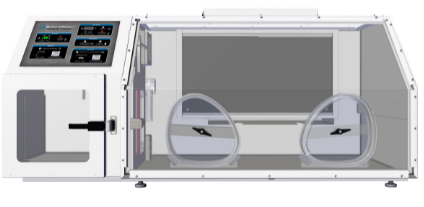
The SHEL LAB BACTRON 300 Anaerobic Chamber, manufactured by Sheldon Manufacturing, is a controlled-atmosphere laboratory workstation designed for handling, cultivating and studying anaerobic microorganisms. With a 453 L (16 cu. ft.) workspace and an integrated 300-plate incubator, it provides room for microbiology research that requires oxygen-sensitive samples to remain in an anaerobic environment during handling and incubation.
For Canadian universities, the BACTRON 300 is suited to research in microbiology, microbiome science, anaerobic bacteriology, microbial ecology, fermentation and related disciplines. It can also support supervised teaching and research-training activities where students need experience working with anaerobic cultures.
The chamber combines an enclosed workspace, built-in incubator, airlock and gas-control system. Researchers can manipulate culture plates and specimens through sealed armport sleeves while maintaining the chamber atmosphere.
Manufacturer model: BACTRON300 | 120 V part ID: BAA30023 | Incubator capacity: 300 plates
Ideal for Canadian University Laboratories
-
Microbiology and bacteriology: Cultivation and study of anaerobic microorganisms.
-
Microbiome research: Work involving oxygen-sensitive microorganisms and culture-based research methods.
-
Environmental microbiology: Investigation of anaerobic organisms associated with soils, sediments and other environmental samples.
-
Food science and fermentation: Research involving anaerobic microbial processes and spoilage organisms.
-
Biomedical and veterinary microbiology: Appropriate culture-based research requiring anaerobic conditions.
-
Graduate and postgraduate research: A shared workstation for trained researchers working on multiple experiments.
-
Research teaching laboratories: Supervised demonstrations and training in anaerobic microbiology methods.
Why Choose the BACTRON 300 for a University Research Laboratory?
For research involving oxygen-sensitive microorganisms, a consistent anaerobic environment can be important during sample preparation, culture handling and incubation.
The BACTRON 300 gives researchers access to both a working area and an incubator within the same controlled environment. This is particularly useful when experiments require repeated handling, inspection or transfer of anaerobic cultures.
Key Features and Research Benefits
-
453 L enclosed workspace: Provides space for handling specimens, culture plates and appropriate laboratory materials.
-
Integrated 300-plate incubator: Allows anaerobic cultures to be incubated without transferring them to a separate aerobic environment.
-
Sealed armport sleeves: Permit direct manipulation of samples and plates within the chamber.
-
216-plate airlock capacity: Supports transfers into and out of the main chamber.
-
Automated airlock cycles: Helps standardize sample transfer procedures between different laboratory users.
-
Auto-commissioning: Manufacturer-designed automated cycle for establishing the anaerobic atmosphere.
-
Low gas supply alarm: Audible and visual notification alerts operators to low anaerobic mixed gas supply pressure.
-
Integrated vacuum pump: Supports the chamber's airlock evacuation system.
-
Internal gas regulation: Supports controlled gas delivery during chamber operations.
-
Standard side access panel: Helps with installation and placement of appropriate equipment in the working area.
-
Digital incubator controls: Adjustable temperature with a 0.1°C display resolution.
What Makes an Anaerobic Chamber Different from Anaerobic Jars?
Anaerobic jars and pouches are often practical for smaller numbers of cultures or occasional anaerobic incubation. An anaerobic chamber is designed for work that also requires handling or manipulating samples under anaerobic conditions.
The BACTRON 300 provides a working environment where appropriately trained researchers can prepare, inspect and transfer cultures without routinely exposing them to normal room air.
For universities running multiple research projects, this may make a chamber more suitable than relying exclusively on individual anaerobic jars. However, it requires dedicated laboratory space, a continuous gas supply and ongoing maintenance.
When is an anaerobic chamber worth considering?
A chamber may be a good fit when a research group:
- Regularly handles oxygen-sensitive microorganisms.
- Needs to manipulate cultures under anaerobic conditions.
- Processes many plates or samples across ongoing experiments.
- Shares equipment among trained graduate students, technicians and researchers.
- Requires an integrated incubator within a controlled anaerobic workspace.
For occasional anaerobic incubation without extensive sample manipulation, simpler culture systems may be more economical.
Technical Specifications
| Manufacturer |
Sheldon Manufacturing / SHEL LAB |
| Model |
BACTRON300 |
| 120 V Part ID |
BAA30023 |
| Workspace Volume |
453 L / 16.0 cu. ft. |
| Exterior Dimensions (W x D x H) |
1583 x 813 x 701 mm (62.3 x 32.0 x 27.6 in) |
| Workspace Dimensions (W x D x H) |
1059 x 734 x 635 mm (42.5 x 28.9 x 25.0 in) |
| Airlock Volume |
36.5 L / 1.29 cu. ft. |
| Airlock Dimensions |
406 x 254 x 292 mm (W x D x diagonal) |
| Airlock Capacity |
Up to 216 plates |
| Integrated Incubator Capacity |
300 plates |
| Incubator Volume |
39.6 L / 1.4 cu. ft. |
| Incubator Dimensions (W x D x H) |
699 x 216 x 343 mm (27.5 x 8.5 x 13.5 in) |
| Incubator Temperature Range |
Ambient +5°C to 70°C |
| Temperature Uniformity |
±1.0°C at 37°C |
| Temperature Stability |
0.2°C, midrange |
| Controller |
Digital, 0.1°C display resolution |
| Electrical Requirements |
110-120 V AC, 50/60 Hz, 11 A (BAA30023) |
| Unit Weight |
138 kg / 304 lb |
| Safety Standards |
Manufacturer lists applicable UL, EN and CSA 61010-1 and 61010-2-010 standards. See current operator manual. |
Specifications are based on Sheldon's current BAA30023 product listing and April 2026 manual. Verify the electrical version, supplied configuration and any institution-specific requirements before ordering.
Planning Installation in a Canadian University Laboratory
Before purchasing a BACTRON 300, the research group and university purchasing team should confirm the available laboratory space, utilities, gas supply and delivery arrangements.
This equipment requires more planning than a conventional benchtop incubator. Reviewing these requirements before issuing a purchase order helps avoid unexpected installation costs or delays.
Essential Pre-Purchase Requirements
| Requirement |
What Your University Should Confirm |
| Laboratory Space |
Suitable bench or equipment stand, room for the full 1583 mm width and additional operating and ventilation clearance. |
| Electrical Supply |
A suitable grounded 110-120 V power source for the 11 A unit. The manufacturer recommends a separate circuit. |
| Anaerobic Mixed Gas |
A continuous supply of manufacturer-specified AMG from an approved compressed-gas supplier or suitable institutional system. |
| External Gas Regulator |
A compatible regulator is required but is not included with the chamber. Sheldon lists part 9740560. |
| Room Conditions |
Indoor ambient temperature of 15°C to 30°C and conditions meeting the manufacturer's humidity and temperature-stability requirements. |
| Receiving and Placement |
Campus delivery location, freight access, door clearances, handling equipment and movement to the final laboratory. |
| Institutional Safety Review |
Approval of gas cylinder storage, laboratory safety procedures, organism handling and applicable biosafety requirements. |
| Commissioning and Training |
Determine who will install, commission and train users. Confirm whether any services are included in the quotation. |
Important Gas Supply Requirement:
The BACTRON 300 requires anaerobic mixed gas (AMG) for operation. Sheldon recommends a mixture of 5% hydrogen, 5% carbon dioxide and 90% nitrogen. Do not exceed the manufacturer's hydrogen concentration limit. The external AMG regulator and gas supply must be arranged separately. University laboratory safety personnel should review gas supply, storage and handling requirements before installation.
Does the BACTRON 300 require a special electrical connection?
The standard BAA30023 model operates on 110-120 V AC, 50/60 Hz and draws 11 A. Sheldon recommends a separate, properly grounded electrical circuit with a 15 A breaker.
Universities should confirm the outlet location, circuit capacity and electrical requirements with their facilities department. A separate 220-240 V configuration is also described in the manufacturer manual and should be specified before ordering if required.
How much room does the chamber require?
The instrument measures approximately 1583 mm wide, 813 mm deep and 701 mm high. Additional clearance is required for ventilation, the airlock, gas connections, access panels and normal operation.
The manufacturer specifies a minimum 64 mm clearance around required ventilation areas. Additional service and operator clearance should be evaluated for the intended installation.
A suitable rolling equipment stand may be considered where available.
Can the university use its existing nitrogen supply?
The chamber still requires anaerobic mixed gas. An optional dual-gas configuration allows nitrogen to be used for some airlock cycles, which can reduce AMG consumption.
Confirm the gas arrangement and appropriate regulator requirements with the manufacturer, your institutional gas supplier and university safety personnel before installation.
Recommended Accessories and Ongoing Supplies
For a university research group, the initial equipment quotation should also account for the items required to establish and maintain the chamber atmosphere.
| Item |
Manufacturer Part Number |
Purpose |
| AMG Gas Regulator |
9740560 |
Required external regulator, purchased separately |
| Anaerobic Indicator Strips |
9900706 |
Ongoing monitoring of anaerobic conditions |
| Oxygen Scrubber Cartridges |
9990759 |
Catalytic oxygen removal system components |
| Petri Plate Racks |
5110729 |
Organization of culture plates |
| Handheld Oxygen Sensor |
9902223 |
Optional instrument for checking oxygen levels |
| Rolling Equipment Stand |
BACSTAND-MD22 |
Optional support stand for chamber placement |
Accessory numbers are drawn from Sheldon documentation. Availability, compatibility with the current BAA30023 revision and whether individual items are included in the factory shipment should be confirmed when preparing a quotation.
Related University Microbiology Supplies
Cambridge also supplies related microbiology consumables that may be useful when setting up a research laboratory:
Culture media and consumables should be selected according to the organism, experiment and laboratory protocol. Not all media or dishes are appropriate for every anaerobic research application.
University Purchasing and Research Equipment Quotations
The BACTRON 300 is a significant laboratory equipment purchase, and the total project cost may include more than the chamber itself.
Cambridge Environmental can work with Canadian university researchers, laboratory managers and purchasing departments to prepare a quotation that addresses the proposed equipment configuration and purchasing requirements.
When requesting a quote, we recommend providing:
- University and department name
- Shipping campus and laboratory location
- Required electrical configuration
- Intended research application
- Existing gas supply arrangements
- Required accessories and replacement consumables
- Requested delivery timeframe
- Any institutional quotation or purchase order requirements
We can help confirm equipment and accessory pricing in Canadian dollars, freight arrangements, estimated availability and manufacturer documentation needed for internal purchasing review.
If installation, commissioning, training or special delivery services are required, these should be discussed and confirmed in the quotation rather than assumed to be included with the chamber.
Frequently Asked Questions
Is the BACTRON 300 suitable for university microbiology research?
Yes. The BACTRON 300 is intended for anaerobic microbiology applications, including culture-based research, microbiome studies, anaerobic bacteriology, fermentation studies and environmental microbiology. Researchers should confirm that the chamber meets the conditions required for their specific organisms and protocols.
Can the BACTRON 300 be used for microbiome research?
Yes. It provides an enclosed anaerobic environment for handling and cultivating appropriate oxygen-sensitive microorganisms. Suitability depends on the microbiome organisms, culture media, gas conditions and research procedure.
What is the incubation capacity?
The integrated incubator has a stated capacity of 300 culture plates. The airlock has a separate stated capacity of 216 plates. Actual loading depends on the plate dimensions, racks and laboratory arrangement.
Does the BACTRON 300 include an incubator?
Yes. A temperature-controlled incubator is integrated into the anaerobic workstation, allowing appropriate cultures to be incubated without removing them from the chamber environment.
What gas is required for the BACTRON 300?
The chamber requires anaerobic mixed gas. Sheldon recommends a mixture of 5% hydrogen, 5% carbon dioxide and 90% nitrogen. The external gas supply and compatible regulator must be arranged separately. Follow the manufacturer's instructions and university safety procedures.
Does the chamber require an external vacuum pump?
No. The BACTRON 300 includes an integrated vacuum pump for its airlock system. It still requires an external anaerobic mixed gas supply and suitable regulator.
Is this a replacement for a biological safety cabinet?
No. The BACTRON 300 is designed to establish an anaerobic atmosphere for laboratory work. It should not be assumed to provide the personnel or environmental containment functions of a certified biological safety cabinet. Consult your university biosafety office before handling regulated or potentially hazardous organisms.
Can several research groups share one chamber?
A shared laboratory may use the BACTRON 300 across multiple projects when the research protocols and safety requirements are compatible. The university should establish procedures for scheduling, sample identification, contamination control, cleaning and gas management.
Can Canadian universities purchase with a purchase order?
University purchasing departments can contact Cambridge Environmental for a formal quotation and to confirm purchase order processing, institutional account arrangements, freight and applicable taxes before ordering.
Can Cambridge help confirm delivery and installation requirements?
Yes. Provide the campus location, laboratory access information, electrical requirements and gas supply details. We can help review manufacturer documentation and confirm applicable delivery and installation arrangements before the university places an order.
Manufacturer Documentation and Product Video
Researchers and purchasing departments should review the manufacturer documentation, particularly the installation, gas supply, electrical and operating requirements.
The 2023 brochure describes an earlier configuration. For current part IDs, electrical requirements and installation instructions, refer to the 2026 manual and the exact unit being quoted.
Need a BACTRON 300 Quote for Your University Laboratory?
Cambridge Environmental Products works with Canadian universities, researchers and laboratory purchasing departments to source scientific equipment and supplies. We can help you determine whether the BACTRON 300 fits your research requirements, laboratory space and available utilities.
Contact us for Canadian pricing, accessory selection, gas regulator requirements, shipping arrangements and a formal equipment quotation. If you are preparing a research equipment purchase, send us your university, department and intended application so we can help put together the right configuration.
Request a Canadian University Equipment Quote